
You wake up with a plan, and by evening the day has vanished into messages, small errands and long scrolling breaks. If that sounds familiar, you are not lazy. Most of us simply never learned how to manage time. The good news is that a few simple methods can give you back an hour or two every day. Here are the ones worth trying.
Start by seeing where your time goes
Before you change anything, spend two or three days writing down what you actually do, in rough half-hour blocks. You do not need an app. A notebook is enough. Most people discover that a big chunk of time goes to unplanned tasks, phone checking and switching between jobs. Once you can see the leak, fixing it is much easier.
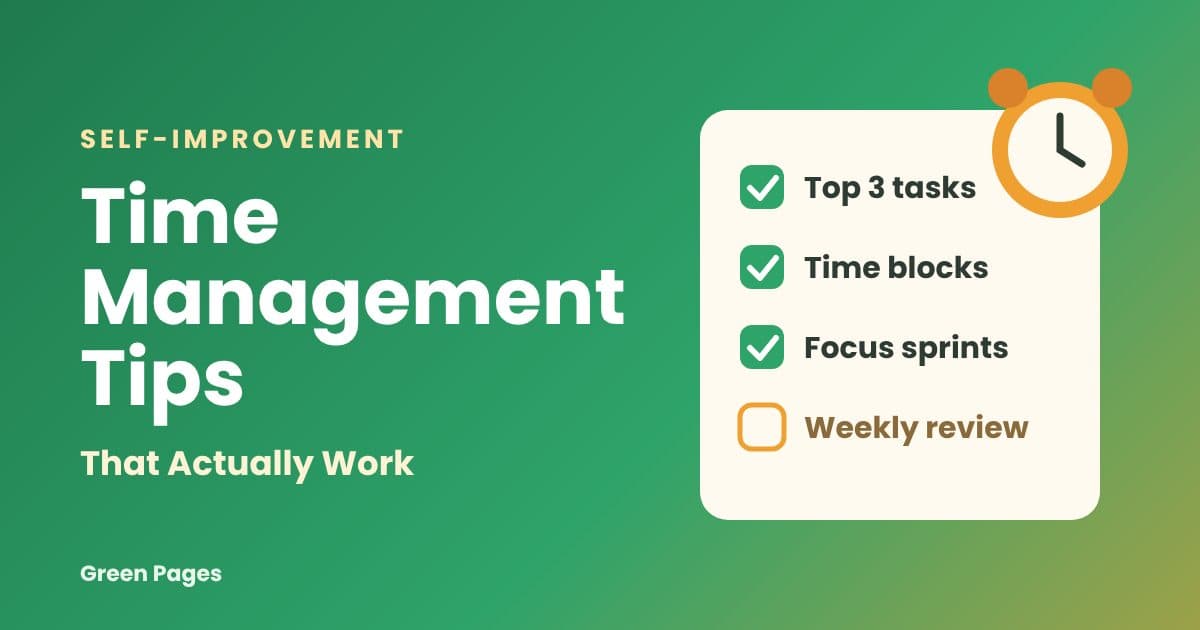
Choose your top three tasks
Every evening, write down the three things that matter most for tomorrow. Not ten, only three. These are the tasks that would make the day a success even if nothing else got done. Do the hardest one first, when your energy is highest. Everything else becomes a bonus.
A long to-do list can feel productive, but it often hides what is truly important. Three clear tasks give you focus and a sense of progress.
Try time blocking
Instead of a list floating in your head, give each important task a place in your calendar. For example, 9 to 11 for deep work, 11 to 11:30 for messages, and 2 to 3 for meetings or calls. Time blocking works because it turns a vague wish into an appointment with yourself.
A few tips for making it work:
Add buffer time between blocks, since tasks usually take longer than planned.
Use your natural daily anchors, such as prayer times and meals, as the frame of the day.
Plan for interruptions by leaving one flexible hour in the afternoon.
Use short focus sprints
The Pomodoro method, created by Francesco Cirillo, uses 25 minutes of focused work followed by a 5 minute break. After four rounds, take a longer break. It suits students preparing for exams, freelancers writing proposals and employees who struggle to start. Knowing that a break is coming makes it easier to begin.
Fight distractions at the source
Your phone is probably the biggest enemy of focus. Turn off notifications for social media and non-urgent apps, and keep the phone out of reach during focus blocks. Check messages at set times instead of every few minutes. If you work from home, tell your family your focus hours so that interruptions are fewer. Even a closed door or headphones can send the signal.
Batch similar tasks
Switching between different kinds of work costs mental energy. Group similar tasks together: answer all emails in one slot, make all calls in another, pay bills once a week. Batching also helps with errands. Combine bank visits, shopping and pickups in one trip to save fuel and time in heavy traffic.
Learn to say no, kindly
Time management is also about boundaries. Pakistani culture values helping others, and that is a beautiful quality. But constantly saying yes to every request leaves nothing for your own goals. You can say, "I cannot do it today, but I can help on Saturday," or "I am busy with a deadline right now." A polite, honest answer protects your schedule and your relationships.
Plan for real life in Pakistan
Power cuts, internet outages and traffic jams are part of life. Build in backups. Charge your laptop and power bank at night, download important documents for offline use, and keep a few low-energy tasks, such as reading or planning, for times when the internet is down. Leave earlier for important meetings and use the travel time for audio lessons or phone calls instead of feeling stuck.
Protect your energy, not just your time
Two people with the same free hours can get very different results, because energy matters as much as minutes. Notice when you feel sharpest, whether that is early morning after Fajr or late in the evening, and place your hardest work there. Save routine jobs such as filing, replying and organising for your low-energy hours. Drink enough water, eat regular meals and take a ten-minute walk when your mind feels foggy. A tired mind takes twice as long to finish the same task, so rest is not wasted time. It is an investment that makes the rest of your day work better.
Do a weekly review
Spend 15 minutes every Sunday looking at the past week. What went well? What was missed, and why? What are the top three goals for the coming week? This small habit stops small problems from becoming big ones and keeps your long-term goals visible.
What this means for you
You do not need a perfect system. Choose one or two ideas, such as the top-three list and one daily focus block, and use them for two weeks. If they help, add another. If a method does not suit your life, drop it and try a different one. Rest is part of good time management too, so protect your sleep and take real breaks.
Quick summary
Track your time for a few days, pick three priorities daily, block time for them, work in short focus sprints, cut distractions, batch similar jobs, say no politely, plan for local challenges and review your week. Small, steady changes will make your days calmer and more productive.
Comments
Loading comments…
Sign in to join the conversation.