
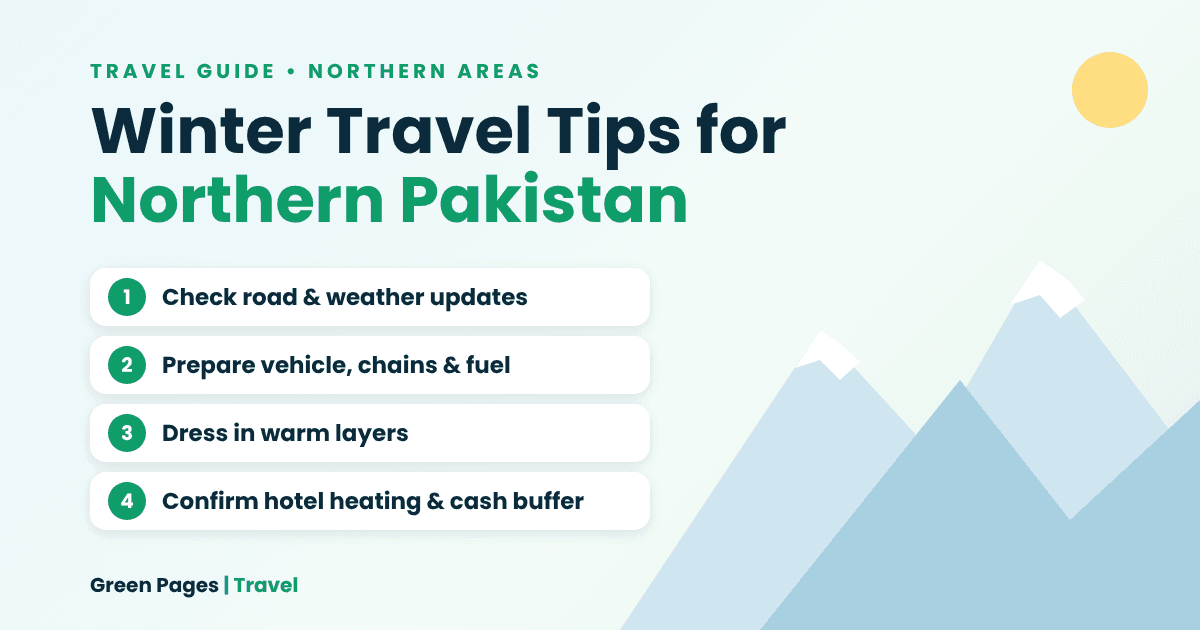
Winter turns northern Pakistan into a very different place. Hunza, Skardu, Swat, Naran and Kaghan look beautiful under snow, but roads close, hotels thin out and weather changes within hours. This guide gives practical winter travel tips for northern Pakistan so your trip stays safe, affordable and enjoyable.
Why Winter Travel in the North Needs Extra Planning
In summer you can often decide the route on the way. In winter you cannot. Snowfall can close mountain roads for a day or for weeks. In recent years, roads such as Babusar Top and the Naran–Kaghan route were closed to tourists in late November or early December after heavy snowfall, according to Pakistani news reports. Early snow is not unusual, so never assume a route that was open last week is open today.
Daylight is also short, temperatures drop sharply after sunset, and help can be far away. Good planning is the best protection.
Check Road and Weather Updates Before You Leave
Make checking updates a habit, not a one-time task. Look at the Pakistan Meteorological Department forecast for your district, and follow advisories from the National Highway Authority (NHA), the National Disaster Management Authority (NDMA) and the provincial disaster management bodies. Local police and district administrations often announce closures on social media first.
Check the forecast the night before and again in the morning of travel.
Call your hotel and ask about the current road condition from the last stop to the hotel itself.
Keep a backup plan, such as another valley or an extra day in a safer town.
Choose the Right Vehicle and Prepare It
A small car with worn tyres is a poor choice on icy roads. If you drive yourself, have the vehicle serviced before departure. Check brakes, battery, wipers, lights, antifreeze and tyre condition. Many travellers use a 4x4 with an experienced local driver on snowy sections, which is often safer than driving an unfamiliar road alone.
Carry these items in the vehicle: snow chains that fit your tyres, a tow rope, a shovel, a torch, a spare tyre with tools, a power bank and a basic first-aid kit. Fill the fuel tank whenever you pass a reliable pump, because fuel stations can be far apart and some may be closed in bad weather.
Pack for Cold, Not for Style
Layering works better than one heavy jacket. Wear a thermal base layer, a warm middle layer such as wool or fleece, and a windproof, water-resistant outer layer. Pack warm socks, gloves, a woollen cap and waterproof boots with good grip. Bring a spare set of dry clothes in a sealed bag.
Lip balm, moisturiser and sunscreen, because snow reflects strong sunlight.
Sunglasses to protect your eyes from glare.
Any regular medicines, plus a few basic ones such as pain relief, in their original packs.
Cash in small notes, as ATMs and mobile networks can fail in remote areas.
Book Hotels Smartly
Winter is the off-season in many valleys, so some hotels close completely. Confirm by phone that your hotel is open, that it has heating, and that hot water is available. Ask how heating works. Gas heaters and bukhari stoves need good ventilation, and carbon monoxide poisoning is a real winter danger. Never sleep with a fuel heater running in a closed room, and do not use charcoal indoors.
Save a screenshot of your booking and the hotel number. Ask about the cancellation policy in case roads close and you cannot reach the property.
Plan Your Budget with a Weather Buffer
Winter trips can cost less on rooms because demand is lower, but extra costs appear: jeep hire, chains, heating charges and unplanned nights when the road is blocked. Keep a buffer of at least one extra night of accommodation and food in your budget. Agree on prices with drivers and hotels before the trip starts, and ask for the final amount in writing or on a message so there are no disputes later.
Stay Safe on the Road
Drive slowly and keep a longer distance from the vehicle ahead. Avoid sudden braking on snow or ice. Try to reach your destination before dark, because black ice and low visibility make evening driving risky. If conditions look bad, turning back or staying put is a good decision, not a failure.
Altitude can affect people too. Headache, dizziness and nausea at higher places can be signs of altitude sickness. Rest, drink water and descend if symptoms get worse. If someone is seriously unwell, seek medical help immediately. This article is general information and not medical advice.
Respect Local People and the Environment
Mountain communities depend on a few seasons of tourism, and winter life is hard. Be polite, dress modestly, ask before taking photos of people, and support local shops and family-run restaurants. Take your rubbish with you. Plastic left in snow shows up everywhere when the snow melts.
What This Means for You
If you plan a winter trip to northern Pakistan, start by choosing flexible dates. Check weather and road updates the day before and on the day. Confirm your hotel and heating, prepare your vehicle, pack in layers and keep a cash and time buffer. Inform a family member about your route and expected arrival time, and share your location when you have signal. If a local authority or police advises against travel, follow that advice.
For travel businesses, hotels and tour operators, winter is a chance to build trust. Clear information on road status, honest pricing and safe heating make guests return in summer. If you run a hotel or tour service in the north, listing it with accurate contact details on Green Pages helps travellers find and call you directly.
Quick Summary
Winter travel in northern Pakistan can be wonderful if you respect the weather. Check road closures often, prepare your vehicle, dress in layers, confirm heating and hotel availability, keep a budget buffer and never push through unsafe conditions. Safe travel is better than a fast trip.
This is general travel guidance, not professional advice. Always check current official road and weather updates before you travel.
Comments
Loading comments…
Sign in to join the conversation.